Book Summary: Adult Children of Emotionally Immature Parents by Lindsay C. Gibson
As an Amazon Associate I earn from qualifying purchases.
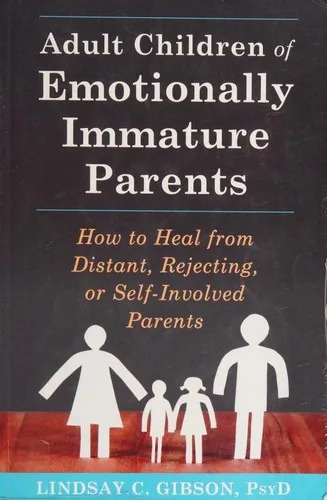
Adult Children of Emotionally Immature Parents (2015) is by Lindsay C. Gibson, a clinical psychologist. It is for adults who grew up with parents who were physically present but emotionally out of reach, and who still feel the effects. It has sold more than a million copies.
The book: Adult Children of Emotionally Immature Parents by Lindsay C. Gibson
If these patterns are showing up in your marriage, book a free first session.
Chapter 1: How Emotionally Immature Parents Affect Their Adult Children’s Lives
Gibson starts with the feeling many readers know but have never named: emotional loneliness. Someone was there physically, but your inner world was invisible to them. Your feelings weren’t explored, your perspective wasn’t valued, and your needs came second to your parent’s comfort.
Emotional intimacy, in Gibson’s words, gives you a sense of being seen for who you really are. Children who don’t get it often learn to play a role instead, putting other people’s needs ahead of real connection. As adults, they may accept emotional loneliness as normal. They choose partners who are similarly unavailable, or they stay hidden even with partners who want to know them.
Chapter 2: Recognizing the Emotionally Immature Parent
Emotionally immature parents are not necessarily abusive, and they are not trying to hurt their children. They lack the emotional development to meet a child’s emotional needs, and many genuinely believe they are good parents.
The pattern shows up as low empathy, little capacity for self-reflection, and a strong focus on themselves. These parents take their children’s feelings personally, dismiss or minimize them, and expect their children to soothe them. They struggle to see their children as separate people, they rarely apologize, and they become defensive when their impact is pointed out.
Chapter 3: How It Feels to Have a Relationship with an Emotionally Immature Parent
Closeness with this kind of parent feels like being pulled into their world, not being known. Gibson calls it enmeshment rather than emotional intimacy. The parent wants to be mirrored and reassured, and uses the child to feel good about themselves. When they cause hurt, they resist repairing it.
The family runs on the parent’s emotional weather rather than the child’s needs. Children learn to watch for the next outburst or withdrawal. A child’s excitement about a good grade might be met with “that’s nice, but your mother is having a hard day,” and the child learns to keep their joy to themselves. Many conclude that something is wrong with them for having needs at all.
Chapter 4: Four Types of Emotionally Immature Parents
Gibson describes four types. They can overlap, and two parents in the same family are often different types.
The emotional parent has big mood swings and needs other people to keep them stable. Small things can feel like a crisis. Children walk on eggshells and learn to manage the parent’s feelings.
The driven parent stays busy trying to perfect everything and everyone. They are goal-focused, often successful, and may look the most normal of the four. They can be intrusive and controlling, and they rarely slow down long enough to know who their child is.
The passive parent avoids anything upsetting. They can be warm, playful, and easier to be around, so children often remember them fondly. But they don’t protect their children, and they usually let a more dominant parent run the family.
The rejecting parent is withdrawn, dismissive, and sometimes derogatory. They act as though they would rather not be bothered, and their children learn to stop asking for attention.
Chapter 5: How Different Children React to Emotionally Immature Parenting
Children adapt in one of two broad ways, and most people are a mix.
Internalizers look inward. When something goes wrong, they assume it is up to them to fix it, and they often feel guilty. They are sensitive, perceptive, and work hard to be no trouble at all.
Externalizers look outward. They act first and think later, blame other people for their problems, and expect others to solve them. They often get more of their parent’s attention, because their problems are louder.
Gibson describes two more adaptations that both types use. The role-self is the part a child learns to play to get the best reaction from their parent: the helper, the achiever, the easy child. Because it is an act, it is tiring and insecure. The healing fantasy is a hopeful story about how the child will finally be loved: if I am good enough, smart enough, or explain myself clearly enough, my parent will finally understand. In adulthood the same fantasy gets placed on a partner who is supposed to make up for everything.
Chapter 6: What It’s Like to Be an Internalizer
Most of the book is written for internalizers. As children, they carried emotional responsibilities far beyond their age. Maybe you were the parent’s confidant, or the one who noticed every shift in mood and adjusted. You knew your parent’s needs well, and lost track of your own.
As adults, internalizers often find it hard to ask for what they need, because it feels selfish or risky. They end up in relationships where they give far more than they get, and they have a harsh inner critic that sounds a lot like the parent. Their strengths are real: empathy, perceptiveness, and a genuine wish to make relationships work. The task is to turn some of that care toward themselves.
Chapter 7: Breaking Down and Awakening
Gibson sees anxiety, depression, and burnout as signals rather than failures. When a role-self can no longer hold, it breaks down, and that breakdown is a chance to wake up to what is really going on. Your true self, she writes, wants you to see what’s really happening.
Awakening means letting yourself feel what happened, grieving the parent you needed and didn’t have, and noticing your automatic patterns: the reflexive apologizing, the trouble saying no, the pull toward people who take more than they give.
Chapter 8: How to Avoid Getting Hooked by an Emotionally Immature Parent
You probably can’t change your parent. Gibson’s goal is to stop expecting an emotional response they can’t give, so you can protect yourself and decide what kind of relationship, if any, you want.
She calls her method the maturity awareness approach. It has four parts:
- Detach and observe. Instead of reacting, step back and watch what your parent does, as if you were studying them. Observing keeps you from being pulled in.
- Express and let go. Say what you think or want, clearly and calmly, and let go of the need for them to understand or agree.
- Focus on the outcome, not the relationship. Decide what you want from a particular conversation, such as ending a visit on time, rather than hoping for a closer bond.
- Manage, don’t engage. Steer the interaction toward that outcome instead of getting caught in old arguments.
Chapter 9: How It Feels to Live Free of Roles and Fantasies
Once you drop the role-self and the healing fantasy, you stop waiting to be rescued. Taking action replaces the old helplessness. Self-compassion makes it easier to set limits without guilt, and you can relate to your parent as they are, not as you wish they were.
Chapter 10: How to Identify Emotionally Mature People
If you grew up with emotionally immature parents, you may not know what emotional maturity looks like. Gibson groups the signs into three:
- Realistic and reliable. They deal with reality instead of fighting it, can think and feel at the same time, are consistent, and don’t take everything personally.
- Respectful and reciprocal. They respect your boundaries, give as well as take, compromise, stay even-tempered, can be influenced, tell the truth, and apologize and make amends.
- Responsive. They make you feel seen, like to comfort and be comforted, reflect on their own behavior, and are fun to be around.
Criticism of the book
Not everyone is a fan. Jane Turner Goldsmith, a retired psychologist, argued in The Conversation (2025) that the book blurs the line between harmful parenting and ordinary imperfection, that its types flatten real people, and that it makes it “just a little too convenient to blame the emotionally immature parent for everything.” It is worth keeping in mind. Understanding your parent is meant to free you to grow up, not to give you a new reason to stay stuck.
What this means for your relationship
The patterns from your family show up in your marriage. An internalizer may over-function and resent it. Someone with a healing fantasy may expect a partner to finally give them what a parent couldn’t. In couples therapy, I spend real time on getting clear on your parents, because seeing them clearly helps you see yourself and your partner clearly.
Related reading:
- Why does my therapist want to talk about my parents?
- The myth of parental innocence
- Parental blindness
- How to write a parental dialogue, an exercise for a hard conversation with a parent
- Summary of Bowen Theory’s Secrets by Michael Kerr
Related video
This book is about seeing your parents clearly enough to stop living inside their limits. I ask about parents in therapy for a connected reason: a flaw you can finally see in them is often the same flaw you have not been able to see in yourself, and it shows up in your marriage.
50-minute sessions cost $300
Your first session is free
I don’t take insurance