Book Summary: Mating in Captivity by Esther Perel
As an Amazon Associate I earn from qualifying purchases.
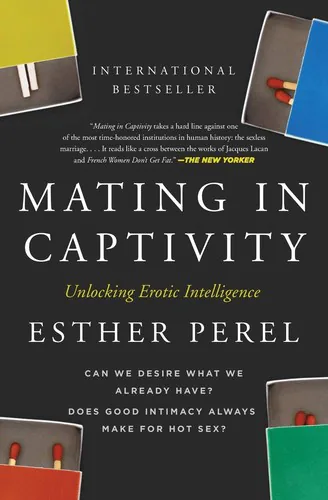
The book: Mating in Captivity by Esther Perel
Esther Perel tackles one of the most confusing paradoxes in modern relationships: why does sexual desire fade in loving, committed partnerships? In Mating in Captivity, she argues that the very things that make relationships secure (familiarity, closeness, predictability) can extinguish the erotic spark.
Her central insight: intimacy and desire operate on different logics. Intimacy thrives on closeness and knowing. Desire thrives on distance and mystery. The challenge for long-term couples is holding both.
Chapter 1: From Adventure to Captivity
Perel opens with a provocation: modern marriage asks for something unprecedented. We expect one person to provide what an entire village once did: companionship, economic partnership, emotional support, intellectual stimulation, and passionate sex, forever.
Previous generations didn't expect much from marriage. It was an economic arrangement, a way to raise children, a social institution. Passion was something you found elsewhere, or did without.
Today we want it all. We want our partner to be our best friend and our lover, our confidant and our adventure. This creates an impossible burden. The qualities that make someone a reliable partner (stability, predictability, safety) are often the opposite of what ignites desire (novelty, risk, surprise).
Chapter 2: More Intimacy, Less Sex
Conventional wisdom says intimacy leads to better sex. Know your partner deeply, communicate openly, build trust, and passion will follow.
Perel disagrees. Many couples who are deeply intimate have terrible sex lives. They've merged so completely that there's no space left for desire. They know everything about each other. There's no mystery, no tension, no other to want.
She describes couples who finish each other's sentences, share every thought, and can't understand why they've stopped wanting each other. The problem isn't lack of love. It's lack of separateness.
Desire requires a gap to cross. When there's no distance between you and your partner, there's nowhere for desire to travel.
Chapter 3: The Pitfalls of Modern Intimacy
The chapter’s real title is “Talk Is Not the Only Avenue to Closeness.” Our culture treats intimacy as a talking project. Disclose everything, ask for every detail, and call that closeness.
Perel isn’t convinced. Unrestrained disclosure doesn’t automatically create intimacy. Some couples keep a running inventory of each other’s day and still haven’t had a meaningful conversation in years. That kind of transparency can end curiosity. When only togetherness counts and private space is denied, fusion replaces intimacy, and sex dies with it.
The body is a language too. Gestures, attentive acts, and physical presence carry closeness that words don’t. Perel wants each partner more fluent in the other’s language, including the body’s, instead of treating speech as the only real intimacy.
Chapter 4: Democracy Versus Hot Sex
Modern relationships are egalitarian. We negotiate, compromise, and make decisions together. This is good for partnership but potentially bad for passion.
Perel observes that eroticism often involves power, surrender, dominance, the thrill of being taken or taking. These dynamics are hard to access when you're committed to perfect equality in all things.
She's not arguing against equality. She's pointing out that the bedroom might require a different logic than the rest of the relationship. Couples who can play with power in erotic contexts (while maintaining equality in their daily lives) often have more lively sex lives.
Chapter 5: Can Do!
The full title is “Can Do! The Protestant Work Ethic Takes On the Degradation of Desire.” Americans like a goal, a plan, and a score. Perel says we apply that same work ethic to sex. Dwindling desire gets treated as a scheduling problem, a communication problem, or a technique problem. Follow the steps. Nail the orgasm.
Eroticism doesn’t work that way. It’s inefficient. When you measure sex by performance and frequency, you miss the feeling. The body gets divided into parts that are supposed to function on command, and desire itself drops out of the picture.
Chapter 6: Sex Is Dirty; Save It for Someone You Love
The subtitle is “When Puritanism and Hedonism Collide.” We live with both messages at once. Sex is everywhere, and sex is still suspect. Don’t do it until you’re married. Just do it whenever you feel like it. It’s no big deal. It’s a huge deal.
Perel thinks that cultural split, not just stress or a bad week, helps explain why so many couples go erotically numb with the person they love. The same culture that sells sex also makes it hard to want it at home without shame.
Chapter 7: Erotic Blueprints
“Tell me how you were loved, and I’ll tell you how you make love.” Before school, movies, or religion get to us, our caregivers do. The psychology of adult desire is often buried in that early history: whether we learned pleasure or not, trust or not, whether we were held or we had to monitor someone else’s needs.
Perel calls this the archaeology of desire. How you make love now still carries how you were loved then.
Chapter 8: Parenthood
The chapter is “When Three Threatens Two.” The child, who came from the couple’s love, often threatens the romance that made the child.
Family life wants comfort and consistency. Eroticism wants unpredictability, spontaneity, and risk. Perel’s line: “What eroticism thrives on, family life defends against.”
Culture equates maternal devotion with selflessness. The selfishness in pleasure can make a mother feel like a bad mother. Reconnecting with an erotic self, separate from the maternal self, is the work. Parents also have to be practical. A regular date, a weekend away, or an extra half hour in the car is how a couple cordons off erotic territory. For Perel, planning says the erotic bond is worth protecting.
Chapter 9: Of Flesh and Fantasy
Fantasy is a direct route to pleasure. Perel uses it as a map of what someone is trying to repair or reclaim. Catherine, once the overweight girl left guarding the door, plays a high-priced woman men will risk everything to have. Daryl, who can’t pick a restaurant, wants to tie his wife up, because domination lets an aggression he can’t use in daily life find a safe, consensual shape.
She is careful about sharing those fantasies. Privacy isn’t the same as a full exposé. Some couples are freed by telling. Others are hurt. When criticism shows up, the erotic mind goes into hiding. What was private becomes secretive, and the sex goes dull.
Chapter 10: The Shadow of the Third
The moment two people become a couple, a third appears: the people they didn’t choose, the stranger on the subway, the threat of someone else. The chapter rethinks fidelity. The third includes jealousy and the possibility of an affair, along with private fantasy.
Jealousy and the shadow of infidelity can wake a relationship that habit has flattened. That isn’t an argument for having an affair. It’s an argument for taking the third seriously. Your partner has an erotic life you don’t fully own. You can know they look at others without fully knowing what they see.
Chapter 11: Putting the X Back in Sex
People will experiment wildly outside the relationship and stay tame at home. Security inside, adventure outside. Perel wants that erotic freedom brought back into the committed relationship.
She cites Helen Fisher on the short life of the passion cocktail. Companionship, respect, and care are real. The work of the last chapter is to bring eros back beside them, and to stop saving the alive part of yourself for somewhere else.
Main points
-
Intimacy and desire operate on different logics. Closeness feeds intimacy but can extinguish desire. Desire needs distance, mystery, and separateness.
-
Talk is not the only intimacy. Unrestrained disclosure can kill curiosity. Partners still need a private interior, and the body speaks too.
-
You can’t work-ethic your way to desire. Scoring sex by frequency and performance misses the feeling.
-
Eroticism involves playing with power. The bedroom may require a different logic than the egalitarian partnership you've built.
-
Parenthood defends against what eroticism needs. Family life wants stability. Desire wants risk. Protect an erotic self that isn’t only a parent, and plan the time for it.
-
The third is part of fidelity. Outside attraction and fantasy are in the picture. The question is what you do with erotic freedom at home.
-
See your partner as other. Your partner is not fully knowable. Approaching them with curiosity rather than assumption keeps desire alive.
50-minute sessions cost $300
Your first session is free
I don’t take insurance