Book Summary: Getting the Love You Want by Harville Hendrix and Helen LaKelly Hunt
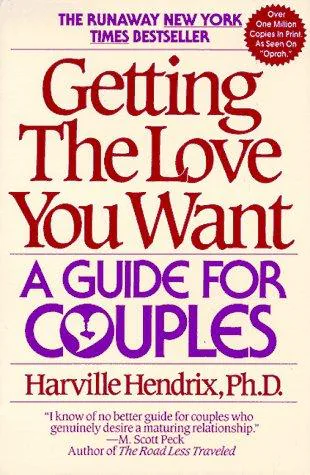
Getting the Love You Want is the book behind Imago Relationship Therapy. Harville Hendrix published the first edition in 1988 under his name alone. This summary follows the fully revised 2019 edition, which credits Hendrix and Helen LaKelly Hunt as coauthors. Their theory is the same one the book became known for: we unconsciously choose partners who resemble our childhood caregivers, then recreate childhood dramas in our adult relationships.
This sounds like a recipe for disaster, and often is. Hendrix and Hunt argue that these patterns also contain the seeds of healing. The conflicts that tear couples apart can become the path to becoming whole.
Part One: The Unconscious Partnership
Chapter 1: Love, Lost and Found
The opening chapter is about what has changed in how people meet, and what has not. People still want lasting love, and lost love still hurts the way it always has. Under the fights about chores, money, parenting, and phones, Hendrix and Hunt see one unconscious agenda, formed early in life: to feel fully alive and connected again, the way we did with our first caretakers. You hand your partner that job. "I expect you to satisfy the unmet needs I brought from childhood."
Most people don't know they are doing this. The unconscious isn't repeating the past out of habit. It is trying to heal old wounds.
Chapter 2: Childhood Wounds
To understand the partnership, you have to know something about childhood. Hendrix and Hunt don't ask you to spend years analyzing each other. Talking about what it was like growing up is enough to shift you from judgment to curiosity. Needs that went unmet, for safety, affection, and a steady kind of care, become the store you bring into marriage.
Those wounds also shape the parts of you that got shut down. If you didn't get enough attention, you might chase it, or learn not to need it. If you were criticized constantly, you might flinch at judgment, or grow a thick shell. Later you look for a partner who will finally give you what your caregivers couldn't. The trap is that you choose someone who resembles them, so they are often badly equipped to give you that.
Chapter 3: Your Imago
The Imago is the unconscious image of the person who can make you feel whole. It is a composite of the positive and negative traits of the people who raised you. You are drawn to a partner who matches it, including the traits that wounded you.
That is why the match can look like bad luck from the outside. The child of a critical parent is drawn to criticism. The child of an emotionally distant parent is drawn to someone who can't open up. You chose a whole package, not just the good parts. Your partner's frustrating traits aren't random. They are part of why you chose them. That doesn't excuse bad behavior. It tells you what the fight is about.
Chapter 4: Romantic Love
Romantic love is the high before the fight. Chemistry and old-brain projection make your partner seem like the answer: the person who will restore what childhood took. For a while, you are everything the other wants, and the negative traits stay out of focus.
Hendrix and Hunt treat that rush as real, and as temporary. The same match that feels like completion is the match that will later wound you in a familiar way. Romantic love is what gets the two of you in the room. It is not the relationship.
Chapter 5: The Power Struggle
After the romantic phase, couples enter what the book calls the power struggle. The partner who seemed perfect now seems impossible. A trait you fell for starts to grate. The conservative partner seems prudish. The quiet partner seems withholding. The outgoing partner seems like too much.
Once the relationship feels secure, an old switch flips. The wounded child wants the payoff and is less interested in earning it. You stop seeing your partner clearly and start seeing your caregivers. Then you try to change each other. "If only you would do X, I would be happy." That rarely works, because both of you are making the same demand, and neither wants to go first.
There is no chapter called "Resolving the Power Struggle." The way out is the rest of the book: a conscious partnership, not a better partner.
Part Two: The Conscious Partnership
Chapter 6: Becoming Conscious
The old brain chooses the partner, fires the defenses, and treats today like childhood. It also keeps you alive and pulls you toward connection. A conscious partnership puts the new brain to work alongside it: the part that can tell your partner from your parent, and today from yesterday.
Hendrix and Hunt define it as a relationship that supports the growth of both people, with the relationship itself as the thing you take care of. You stop assuming your partner can read your mind. You ask for what you want. You get curious instead of trying to make them more like you. And you accept that a lasting relationship takes commitment and the courage to change. You have to become the right partner. Falling for the perfect mate was the unconscious plan.
Chapter 7: Commitment
Commitment, in this chapter, is the decision to close your exits. Exits are the ways couples in the power struggle leak energy out of the relationship. Some are obvious, such as affairs and addictions. Some are quiet: work, emotional distance, a life that stays everywhere except with your partner. Hendrix and Hunt call the quiet version an invisible divorce.
Closing exits doesn't mean giving up friends or hobbies. It means putting the energy you have been using to avoid the relationship back into it. They treat that decision as the precondition for the work that follows. Without it, insight doesn't change much.
Chapter 8: Discovering Your Partner
You cannot heal with a picture of your partner that is really a picture of your parents. This chapter is about seeing them as another person who wants to be happy and connected. The tool is the Imago Dialogue.
The dialogue has three steps:
Mirroring: You reflect what you heard. "What I hear you saying is..." Then you ask if there is more, until they are done.
Validating: You say their view makes sense from where they stand. That is not the same as agreeing.
Empathizing: You imagine what they might be feeling. "I imagine you might be feeling..."
The dialogue is slow on purpose. It interrupts the old-brain comeback and gives you a chance to hear something you have been arguing with for years.
Chapter 9: Creating a Zone of Affirmations
Insight is not enough. This chapter is about bringing back the caring behaviors of the early relationship: specific, positive things you actually do, not a vague promise to be more loving. Hendrix and Hunt add a surprise list and a fun list, ways of giving pleasure without keeping score.
The point of the caring is not to fake romance. Pleasurable, reliable behavior makes the relationship safe enough for the harder work. Reromanticizing lives here, as a practice, not as its own chapter.
Chapter 10: Defining Your Curriculum
Criticism, in their view, is a disguised wish. You turn "You never pay attention to me" into the fear underneath it, then into a desire, then into one specific behavior: "I would like you to put down your phone and look at me when I'm talking." Vague requests ("Be more loving") don't work, because your partner doesn't know what to do.
They call this your curriculum. Stretching into the behavior your partner needs often means growing the part of you that childhood shut down. The Behavior Change Request is the exercise for that conversation. It is not a chapter of its own.
Chapter 11: Creating a Sacred Space
Healing needs a space without contempt. This chapter is about removing negativity from the relationship: criticism, blame, and shame, aimed at each other. Zero negativity is the commitment to stop the put-downs, not a personality transplant. The holding exercise and positive flooding, giving your partner a stretch of the appreciation they have been asking for, belong to this part of the work.
The earlier editions and the workshop materials talk about reromanticizing and a relationship vision. In this edition those are exercises. They are not chapters 11 and 12.
Chapter 12: Portrait of Two Relationships
The last chapter is not a vision exercise. It follows two couples, Anne and Greg, and Kenneth and Grace, who are already practicing the conscious partnership. You see the same moves from the earlier chapters in ordinary fights: asking for a behavior instead of a character change, connecting the present frustration to a childhood need, and receiving care once it is offered. The relationship vision is Exercise 1, in the exercise section, not the ending of the book.
Key Takeaways
-
We choose partners who match our Imago. That image combines our caregivers' positive and negative traits.
-
The unconscious purpose of the relationship is to finish childhood. Romantic love gets you there. It does not finish the job.
-
The power struggle is the next stage, not a sign you picked the wrong person. After the high fades, you fight to get old needs met.
-
What sets you off usually started before this relationship. Your partner's behavior triggers the old wound. It is not the whole cause of it.
-
A conscious partnership uses the conflict for growth. You work on becoming the partner the relationship needs.
-
Safety comes before insight does much good. Close the exits, drop the contempt, and make the space between you reliable.
-
The Imago Dialogue slows the fight down. Mirror, validate, empathize.
-
Stretching into your partner's needs grows you. Giving them what they need often means developing a part of you that childhood stunted.
50-minute sessions cost $300
Your first session is $30
I don’t take insurance